1. Fuselage Resizing and Structural Commonality
The Boeing 777-8 was conceived to address two distinct commercial aviation requirements: an ultra-long-range passenger aircraft capable of point-to-point missions exceeding 16,000 kilometers (8,700 nautical miles), and a high-capacity twin-engine dedicated freighter to succeed the venerated 777F and 747-400F fleets. The 777-8 platform features an overall fuselage length of 70.87 meters (232 feet 6 inches), sitting between the legacy 777-200LR (63.7 meters) and 777-300ER (73.9 meters).
By retaining the composite high-aspect-ratio wing of the 777-9 while shortening the fuselage barrel by approximately 5.85 meters, the 777-8 achieves a higher wing-area-to-weight ratio. This directly bolsters takeoff climb gradients from hot-and-high airfields and extends maximum range capability to 16,190 km (8,745 nmi) with 384 passengers in typical two-class accommodations.
2. The 777-8F Dedicated Cargo Architecture
Launched in early 2022 to meet stringent upcoming ICAO CO2 emissions standards that phase out legacy production freighters, the 777-8F is engineered around maximum structural revenue payload. With a maximum takeoff weight (MTOW) certified at 365,141 kg (805,000 lb), the 777-8F surpasses the structural MTOW of the passenger 777-9.
777-8F Cargo Performance Baseline
Maximum Structural Payload: 112.3 tonnes (247,500 lb)
Range at Maximum Payload: 8,167 km (4,410 nmi)
Total Cargo Volume: 766.1 m³ (27,056 cu ft)
Main Deck Pallet Capacity: 31 standard 96 x 125 in (2.4 x 3.2 m) pallets
3. Main Cargo Door and Barrier Systems
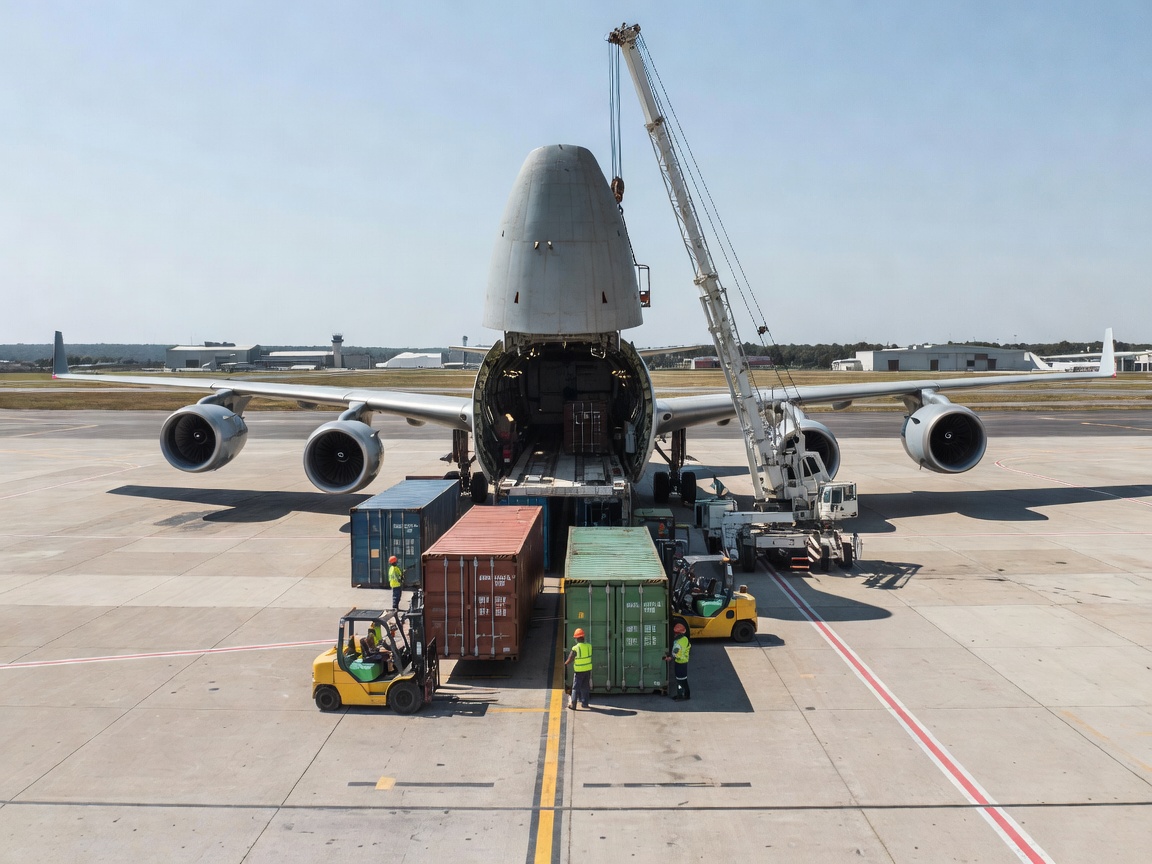
The defining structural engineering element of the 777-8F is the aft main-deck cargo door. Measuring 3.72 meters (146.5 inches) in width and 3.05 meters (120 inches) in height, the door is hinged at the top and actuates upward via hydraulic pressure. The oversized aperture allows seamless loading of 3-meter-tall (10-foot) contour pallets and tall aviation engine shipping stands (including full GE90 and GE9X fan cowls).
Forward of the main cargo deck sits a rigid 9G crash barrier bulkhead constructed from honeycomb composites and aluminum framework. This barrier isolates the forward crew rest compartment, courier seating area, and flight deck from any shifting main deck freight during maximum deceleration conditions, complying with 14 CFR Part 25.561 survivability requirements.
4. Lower Lobe Cargo and Environmental Controls
Beneath the main cargo deck, the 777-8F features forward and aft lower-lobe cargo holds capable of housing 13 standard 96-inch pallets or 40 LD3 unit load devices (ULDs), along with a bulk cargo compartment. Critical to pharmaceutical and perishable logistics, the 777-8F introduces independent multi-zone temperature control. Flight crews can set temperature boundaries in distinct main-deck and lower-deck zones from 4°C to 27°C (39°F to 80°F), regulated by dedicated air distribution ducts and auxiliary heating elements.
Coupled with GE9X fuel burn efficiency, the 777-8F delivers a 25% improvement in fuel efficiency and carbon emissions per tonne compared to four-engine legacy freighters, defining modern twin-engine intercontinental logistics.