1. Structural Dimensions and Fuselage Stretch
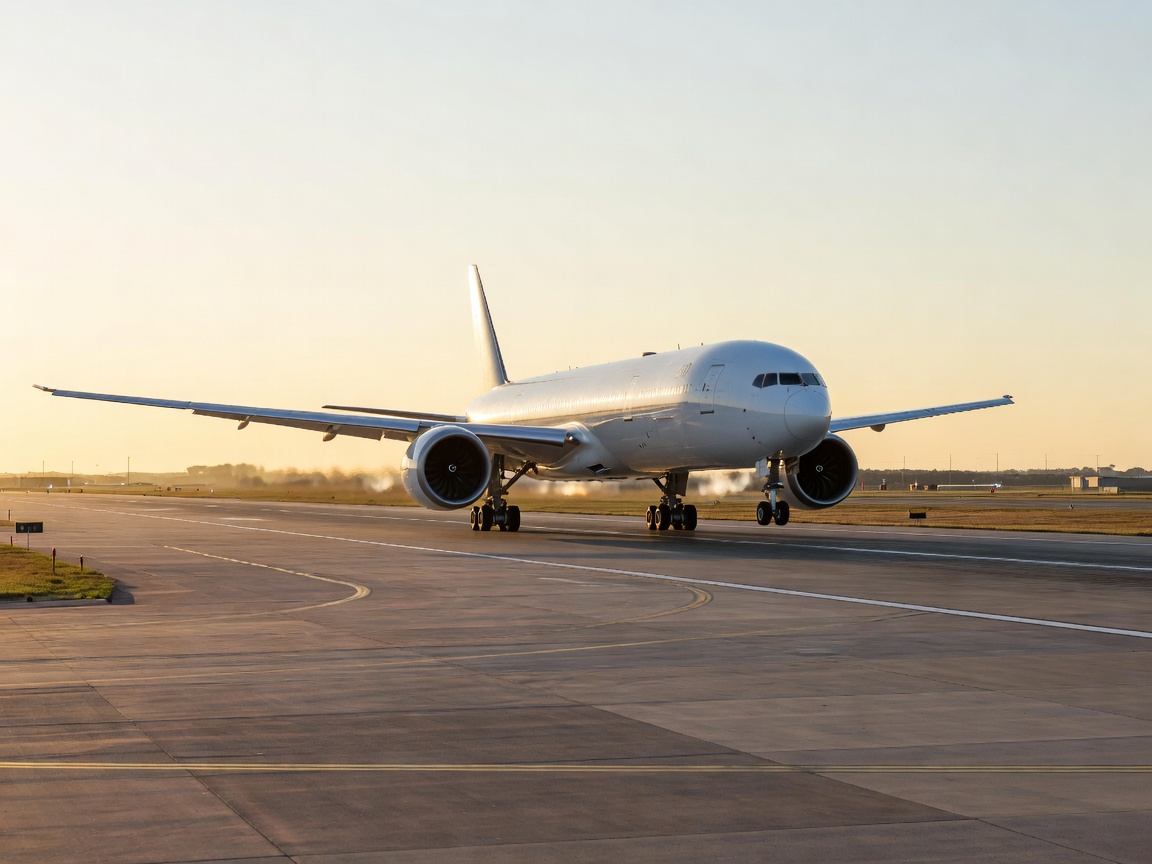
The Boeing 777-9 measures 76.72 meters (251 feet 9 inches) from radome to tail cone, exceeding its predecessor, the 777-300ER, by 2.86 meters. This makes the 777-9 the longest commercial passenger airliner ever brought to flight testing, surpassing even the four-engine Boeing 747-8 Intercontinental (76.3 meters). The fuselage stretch is realized through two distinct structural insertions: a forward body plug measuring 1.47 meters (58 inches) positioned directly forward of the main wing box, and an aft fuselage section plug of 1.39 meters (55 inches) located behind the center fuselage wheel well.
This deliberate geometric distribution maintains favorable aerodynamic pitching moments and preserves the baseline aircraft center of gravity (CG) envelope without necessitating an excessively large empennage. Tailstrike avoidance is enhanced via an active electronic flight control law (FBW) programmed with a tail strike protection system, augmented by a redesigned semi-levered two-post main landing gear assembly. The main landing gear features six wheels per bogie, identical in configuration to earlier Triple Seven models, but reinforced using high-tensile landing gear steel to support the certified maximum takeoff weight (MTOW) of 351,534 kg (775,000 lb).
2. Aerodynamic Performance and Operational Range
The mission envelope for the 777-9 is optimized around long-haul and ultra-long-haul trunk routes. Operating at a standard two-class passenger layout of 426 passengers, the aircraft delivers an operational range of 13,500 kilometers (7,285 nautical miles). When evaluating airline seat-mile economics, the combination of a stretched cabin floor plan and the aerodynamic lift-to-drag (L/D) performance of the carbon-fiber wing results in an estimated 10% reduction in fuel consumption and carbon emissions per passenger seat compared to earlier competitive widebodies.
Key Flight Characteristic Metrics
Design Cruise Speed: Mach 0.84 (approximately 905 km/h or 488 kt at FL350)
Maximum Operating Speed: Mach 0.89 (Vmo/Mmo)
Service Ceiling: 43,100 feet (13,140 m)
Approach Speed Category: Category C/D depending on landing operational weight
3. Type Certification Pathway and Testing Milestones
The 777-9 flight test program commenced its formal airborne phase with aircraft WH001 departing Paine Field in Everett, Washington, on January 25, 2020. Across a fleet of four dedicated flight test vehicles (WH001 through WH004), the flight envelope underwent comprehensive exploration, evaluating flutter margin characteristics, crosswind handling at high crosswind landing test sites, extreme cold soak trials in regional testing centers, and hot-and-high airfield takeoffs.
Certification oversight conducted by the Federal Aviation Administration (FAA) under Type Inspection Authorization (TIA) has focused extensively on commonality with the established 777 type rating, validating the fly-by-wire flight control algorithms, the synthetic vision displays in the cockpit, and the automated folding wingtip control laws. Crew commonality was a pivotal requirement: airline operators transitioning flight crews from the existing 777 family or the 787 Dreamliner require minimal differences training, utilizing standard five-panel touchscreen cockpit avionics inspired by the 787 flight deck architecture.
4. Structural Materials and Weight Mitigation
While the wing structure of the 777-9 is fabricated from fourth-generation carbon-fiber reinforced polymer (CFRP), the main fuselage barrel retains an advanced aluminum-lithium skin design reinforced with composite floor beams. The deliberate choice of an advanced metallic fuselage instead of a monolithic composite barrel—as seen on the 787—was dictated by production scaling, repairability in major line-maintenance hubs, and the requirement to maintain interior fuselage frame pitch while carving out an extra 4 inches of interior passenger width.
By sculpting the inner structural frames and optimizing thermal insulation packs, Boeing engineers managed to widen the usable internal cabin without altering external aerodynamic cross-section drag. This allows 10-abreast seating in economy configurations with comfortable 18-inch seat cushions, providing carriers with unprecedented seat density while preserving passenger cabin ergonomics.